The Right Rice for Every Diwali Dish
Diwali is a festival of lights, but in most Indian homes it is just as much a festival of the kitchen. From fragrant biryanis to creamy kheer and crunchy murukku, rice sits at the heart of the celebration.
The secret most home cooks learn over the years is simple. Not every rice works for every dish. The grain you choose decides whether your pulao turns out fluffy, your payasam turns out creamy and your snacks turn out crisp.
This Diwali, here is a simple guide to picking the right rice for each festive dish on your table.
Basmati for Biryani and Pulao
When the menu calls for a grand biryani or a rich pulao, basmati is the natural choice. Its long, slender grains stay separate after cooking and almost double in length, giving every plate that elegant, restaurant style look.
Aged basmati works best for festive cooking. Rice that has been aged for a year or more absorbs water evenly, holds its shape well and carries a deeper aroma.
Best for vegetable or mutton biryani, Kashmiri pulao, jeera rice, peas pulao and saffron rice.
Tip Soak basmati for about 30 minutes before cooking. It helps the grains lengthen and keeps them from breaking.
Click here to buy fragrant long grain Basmati rice
Seeraga Samba for Tamil Style Biryani
In Tamil Nadu, a festive biryani often means seeraga samba. These tiny, short grains look a little like cumin seeds, which is how the rice gets its name.
Seeraga samba soaks up masala beautifully and has a gentle, distinctive fragrance. It is the rice behind the famous Dindigul and Ambur biryanis, and it brings a homely, regional touch to the Diwali spread.
Best for Dindigul biryani, Ambur biryani, Chettinad biryani and ghee rice.
Tip Seeraga samba cooks faster than basmati, so use a little less water and keep an eye on it towards the end.
Click here to buy aromatic Jeerakasala rice
Ponni and Sona Masuri for South Indian Festive Rice
For the many varieties of rice dishes that fill a South Indian festive table, medium grain rice like Ponni or Sona Masuri is the everyday hero. These grains are light, soft and easy to digest, and they mix well with tempering and spices.
They hold together without turning sticky, which makes them ideal for dishes where rice is tossed with a flavourful base.
Best for lemon rice, tamarind rice (puliyodharai), coconut rice, curd rice and ven pongal.
Tip For variety rice, cook the rice a few hours ahead and spread it out to cool fully before mixing. Cooled rice stays separate and does not turn mushy.
Click here to buy Ponni Boiled rice
Gobindobhog and Short Grain Rice for Kheer and Payasam
No Diwali is complete without something sweet and milky. For kheer, payasam and payesh, short grain rice gives the best results because it releases starch slowly and thickens the milk naturally.
Gobindobhog, a small, fragrant grain from West Bengal, is a favourite for payesh and bhog khichuri. In the South, raw rice (pachai arisi) is the classic choice for paal payasam and sakkarai pongal. Broken basmati also works well for a quick, aromatic kheer.
Best for rice kheer, paal payasam, sakkarai pongal, payesh and firni.
Tip For firni, soak the rice and grind it coarsely before cooking. It gives that smooth, set texture that firni is loved for.
Raw Rice for Diwali Snacks and Sweets
Many of the most loved Diwali treats are made not with cooked rice but with rice flour. For these, raw rice is the grain to reach for. Home ground flour from raw rice gives snacks a lighter crunch and a fresher taste than most packaged flour.
Adhirasam, the traditional Tamil Diwali sweet, is made from soaked raw rice ground with jaggery syrup. Murukku, thattai and seedai also start with rice flour, often mixed with a little urad dal flour for extra crispness.
Best for murukku, thattai, seedai, adhirasam, ribbon pakoda and kozhukattai.
Tip Wash and soak the raw rice, then dry it on a cloth until it is just slightly moist before grinding. Sieve the flour well for smooth, even snacks.
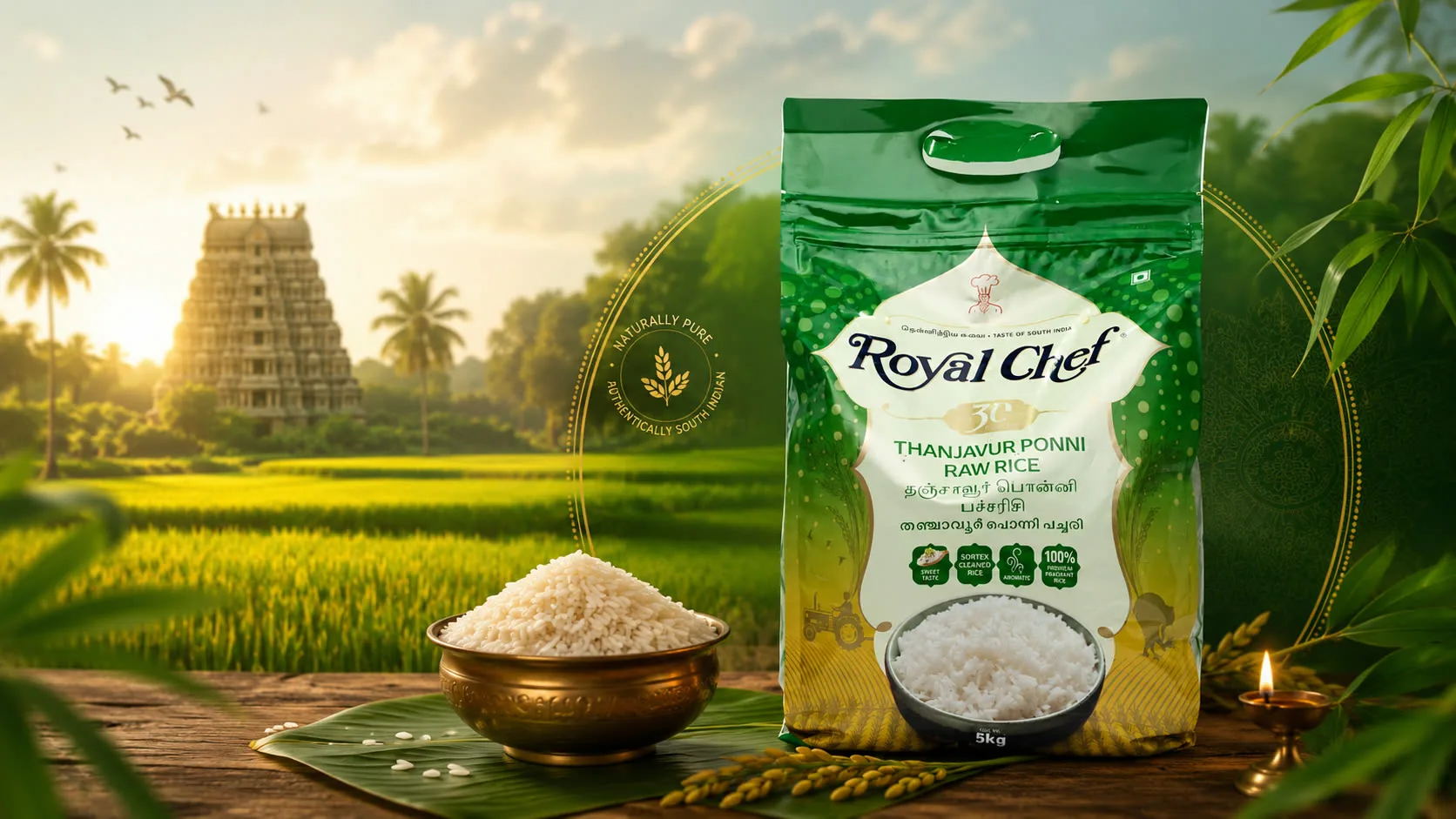
Click here to buy Ponni Raw rice
Poha for Chivda and Festive Snacks
Poha, or flattened rice, is rice in another form, and it shines during Diwali. In Maharashtra and Gujarat, a jar of poha chivda is a must on every faral plate shared with guests.
Thin poha is roasted until crisp and tossed with peanuts, curry leaves, roasted gram and a light spice mix. Thick poha can be deep fried for a richer, crunchier version.
Best for poha chivda, aval mixture and sweet aval with jaggery.
Tip Roast thin poha on a low flame until it turns crisp and light. Let it cool completely before storing so the chivda stays crunchy for days.
A Quick Guide for Your Diwali Kitchen
| Rice variety | Grain type | Best Diwali dishes |
|---|---|---|
| Aged basmati | Long grain, aromatic | Biryani, pulao, jeera rice |
| Seeraga samba | Small grain, fragrant | Dindigul and Ambur biryani, ghee rice |
| Ponni or Sona Masuri | Medium grain, soft | Lemon rice, puliyodharai, curd rice, ven pongal |
| Gobindobhog or raw rice | Short grain, starchy | Kheer, payasam, sakkarai pongal, firni |
| Raw rice (for flour) | Ground into flour | Murukku, adhirasam, thattai, seedai |
| Poha | Flattened rice | Chivda, aval mixture |
A few simple habits make every festive rice dish better. Rinse rice gently until the water runs clear to remove excess starch. Soak long grain rice before cooking for longer, fluffier grains. Store rice in an airtight container away from moisture, especially during the humid festive season.
This Diwali, let the right grain do the work. When you match the rice to the recipe, every dish on your festive table tastes the way it is meant to. Wishing you and your family a bright, joyful and delicious Diwali.


